The DIGIHUMAN 3D printed anatomy models of hand arteries offers an accurate and detailed anatomical representation of the intricate network of blood vessels in the human hand. Printed with high-quality hard material, this model faithfully reproduces the branching and complex structure of small blood vessels using high-precision digital human data.
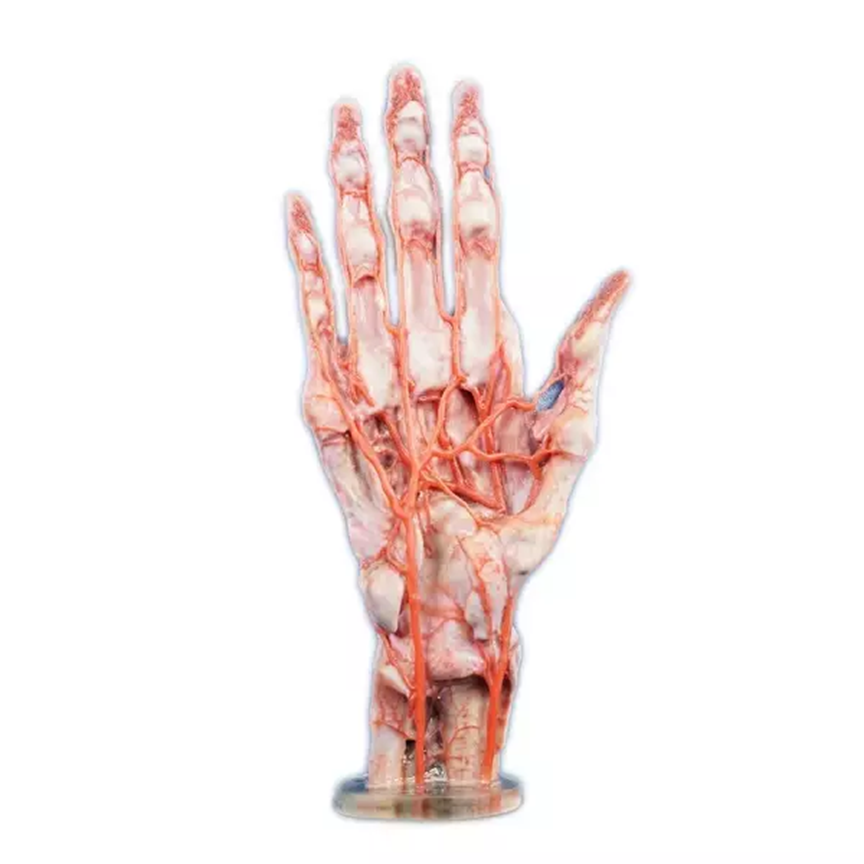
Accurate Reproduction of Anatomical Structures
Based on anatomical specimens of actual hand arteries, the DIGIHUMAN model is reconstructed using advanced three-dimensional scanning techniques. This virtual reproduction ensures that the model closely resembles real anatomical structures, providing a reliable educational tool for anatomy students and medical professionals. The attention to detail in the branching patterns of blood vessels enhances the educational value of the model.
Enhancing Anatomical Understanding
The DIGIHUMAN 3D printed anatomy models serve as effective supplements to traditional anatomical specimens. By offering a physical representation of the hand artery anatomy, students can better appreciate the branching and out-of-shape characteristics of small blood vessels. This model facilitates a deeper understanding of vascular anatomy, essential for various medical and surgical applications.
Practical Applications in Education
Incorporating these models into anatomy courses allows for enhanced learning experiences. Medical students can practice identifying and understanding the layout of arteries, which is crucial for surgical procedures and diagnoses. The tactile nature of the DIGIHUMAN model allows for a hands-on approach to learning, which can lead to improved retention of complex concepts.
Conclusion
In conclusion, the DIGIHUMAN 3D printed anatomy models of hand arteries is a valuable resource for enhancing anatomical education. Its accurate representation and detailed design make it an essential tool for students and professionals aiming to improve their understanding of vascular structures in the human body.

Leave a Reply